
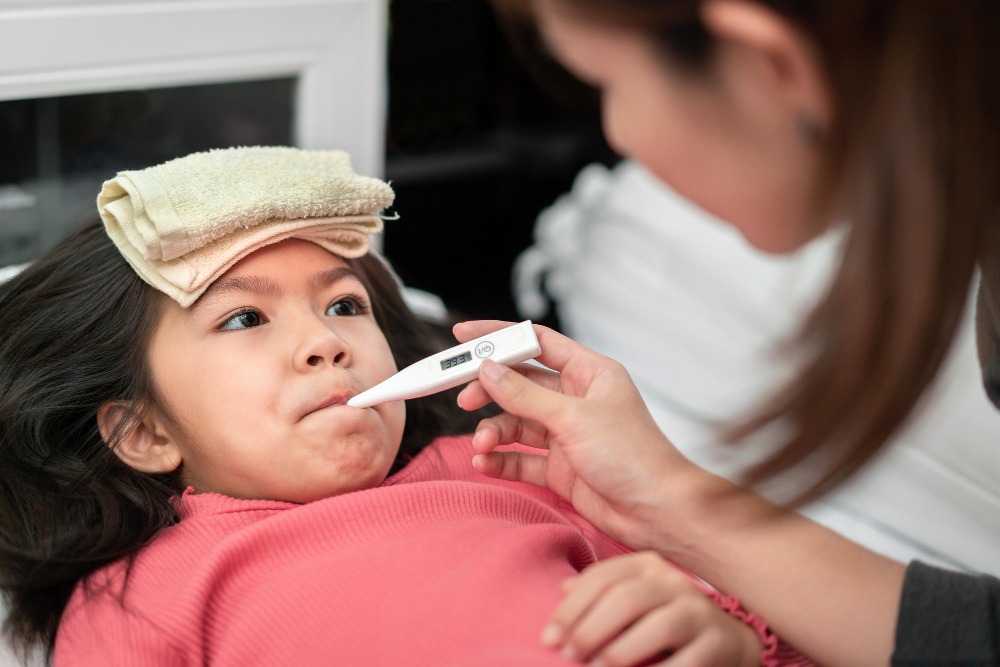
What is Viral Fever in Children?
Viral fever in children is a common illness caused by a virus. It leads to a rise in body temperature. Many parents worry when their child has a fever. However, most viral fevers are mild and go away on their own. Still, knowing about viral fever in children helps parents care for their kids better. Understanding the signs and knowing when to seek help is important for every caregiver.
Common Symptoms of Viral Fever in Children
Children with viral fever may show different symptoms. But some signs are more common than others. For example, a child may have:
Usually, these symptoms last for three to seven days. But if symptoms get worse, it is important to seek medical help.
Causes and How Viral Fever Spreads
Viral fever in children happens when a virus enters the body. There are many types of viruses that can cause fever. For instance, the flu virus, cold virus, or other childhood viral illnesses can lead to fever. These viruses spread easily from person to person. Often, children catch them at school or daycare.
Here are some common ways viral fever spreads:
Because children play close together, they can catch viral infections quickly. Good hygiene helps reduce the risk.
How Viral Fever is Diagnosed in Children
Doctors diagnose viral fever in children by looking at symptoms and doing a physical exam. Usually, no special tests are needed. However, if the fever lasts longer than usual or if the child looks very sick, the doctor may order blood tests. Sometimes, tests help rule out other causes like bacterial infections.
In most cases, a careful checkup is enough. The doctor may ask about recent travel, contact with sick people, or any other health problems.
Treatment Options for Viral Fever in Children
Most viral fevers in children do not need special medicine. The body fights off the virus on its own. Still, treatment focuses on making the child comfortable. For example, parents can:
Antibiotics do not work against viruses. Therefore, they are not used for viral fever in children. If the child has trouble breathing, severe pain, or other worrying signs, seek medical help right away.
Home Care and Lifestyle Tips
At home, simple steps can help your child feel better. For instance, you can:
Additionally, avoid sending your child to school until the fever is gone for at least 24 hours. This helps prevent spreading the illness to others.
Prevention Strategies for Viral Fever
Preventing viral infection in kids is possible with good habits. Here are some tips:
In the United States, following CDC guidelines helps protect children from many childhood viral illnesses.
When to See a Pediatrician
Most viral fevers in children are mild. However, sometimes you need to see a doctor. For example, call your pediatrician if your child:
Early care can prevent serious problems. Always trust your instincts as a parent.
Conclusion
Viral fever in children is common and usually mild. Most children recover with rest and proper care at home. However, knowing the symptoms, causes, and when to seek help is important. If your child has a fever or you are worried, consult a pediatrician at Sri Krishna Children’s Hospital for personalized guidance.